 Basilicata, Italy
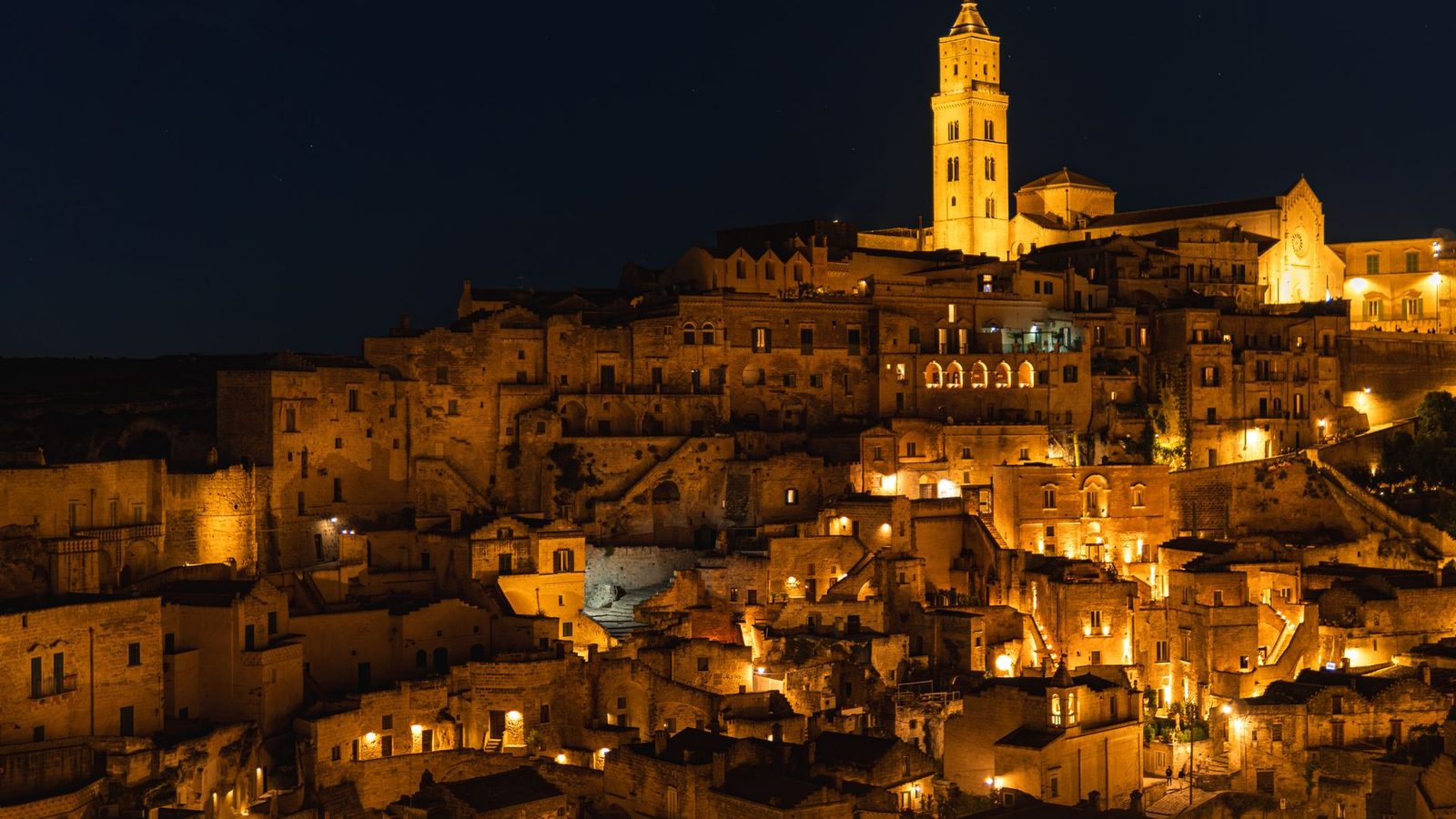
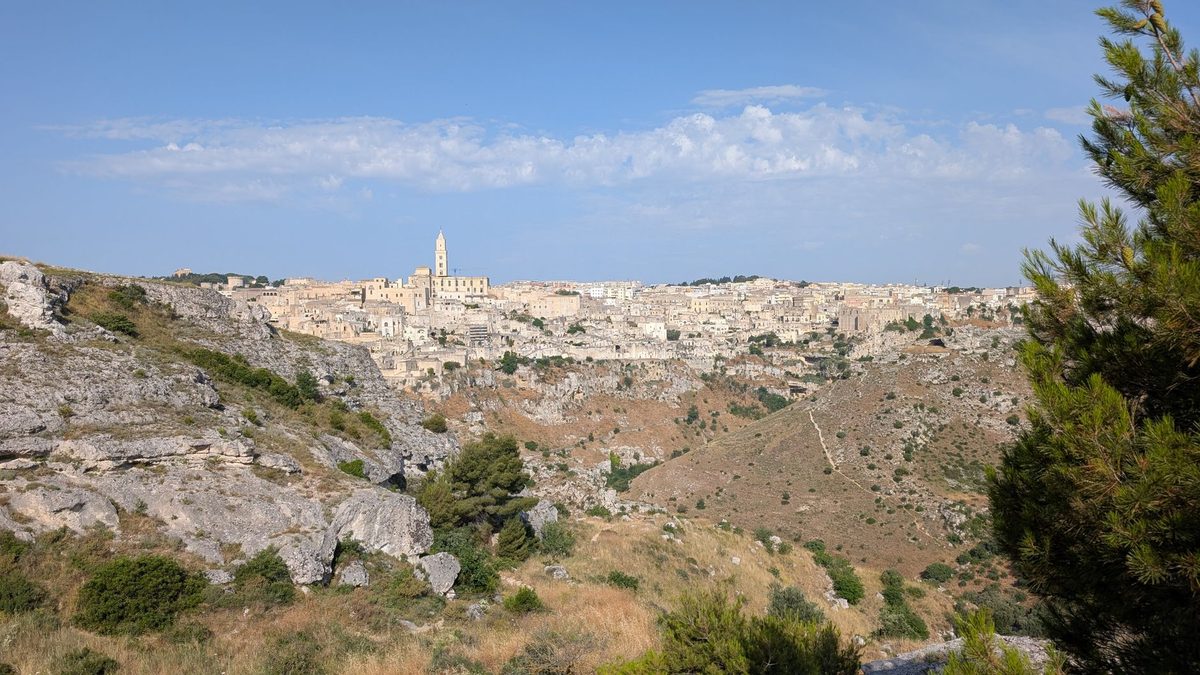
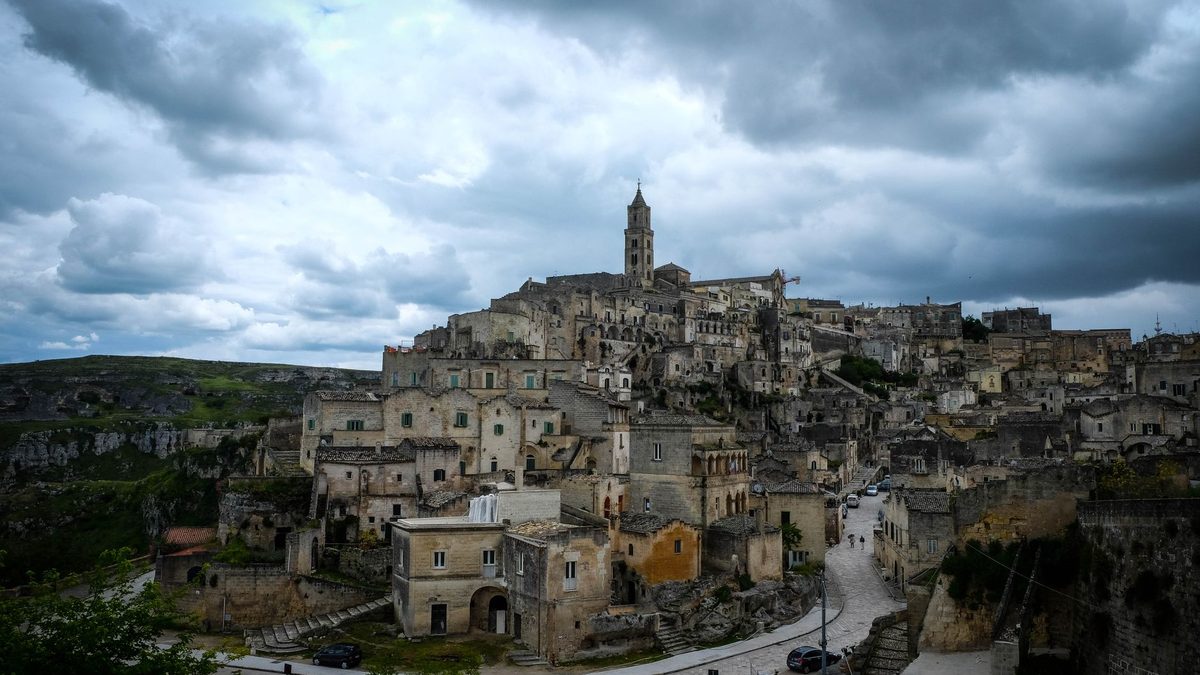
Matera is a city in Basilicata, southern Italy, built on the edge of a limestone ravine. Its old districts, the Sassi, are cave dwellings and stone houses carved into the rock, and a UNESCO World Heritage Site. It is about an hour by road from Bari. The Sassi are free to walk, but the streets are steep. Stay a night to see them lit at dusk, and wear good shoes.
Facts last checked: October 2026. Prices, fees and rules change, so confirm with official sources before you go. How we check.
Watch Matera first
The short video, then the full guide below. The video loads from YouTube only when you press play.
Subscribe on YouTubeThe city that lived in caves
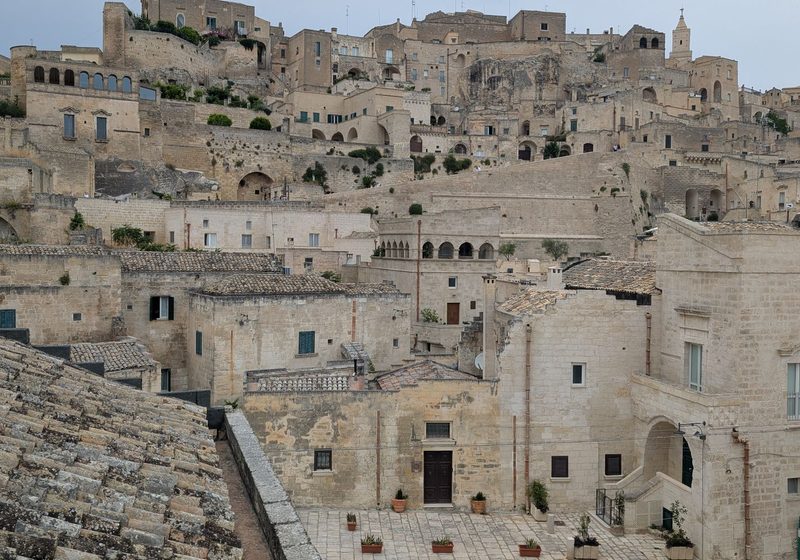
Matera's Sassi grew from a prehistoric cave settlement. People have lived on this slope above the Gravina ravine for thousands of years, and there is evidence of settlement as early as 7000 BC.
In the 1950s, the Italian government moved most residents out of the caves into new housing, citing extreme poverty and malaria. For decades the area was seen as poor and neglected. UNESCO listed it in 1993, and it has been restored since.
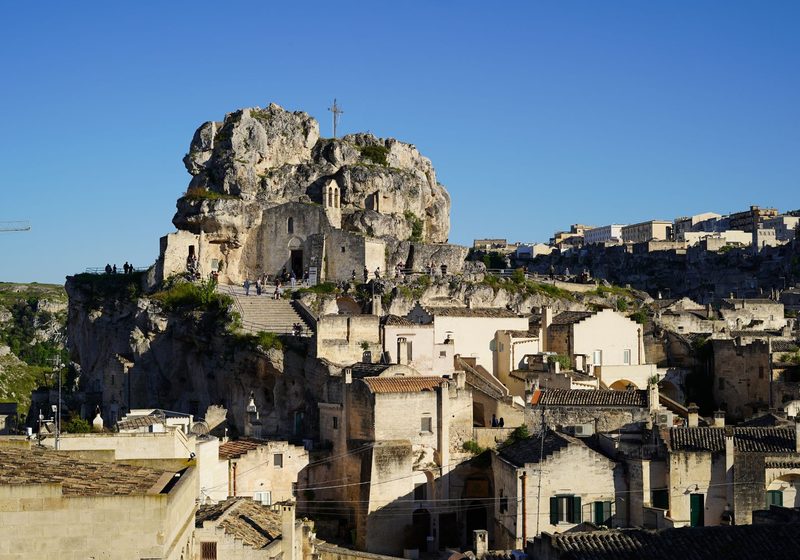
Today you can sleep in a restored cave hotel, eat in a cave restaurant and walk through churches carved into the rock. Matera was a European Capital of Culture in 2019, and it has appeared in films such as The Passion of the Christ and No Time to Die.
Advertisement
What to see
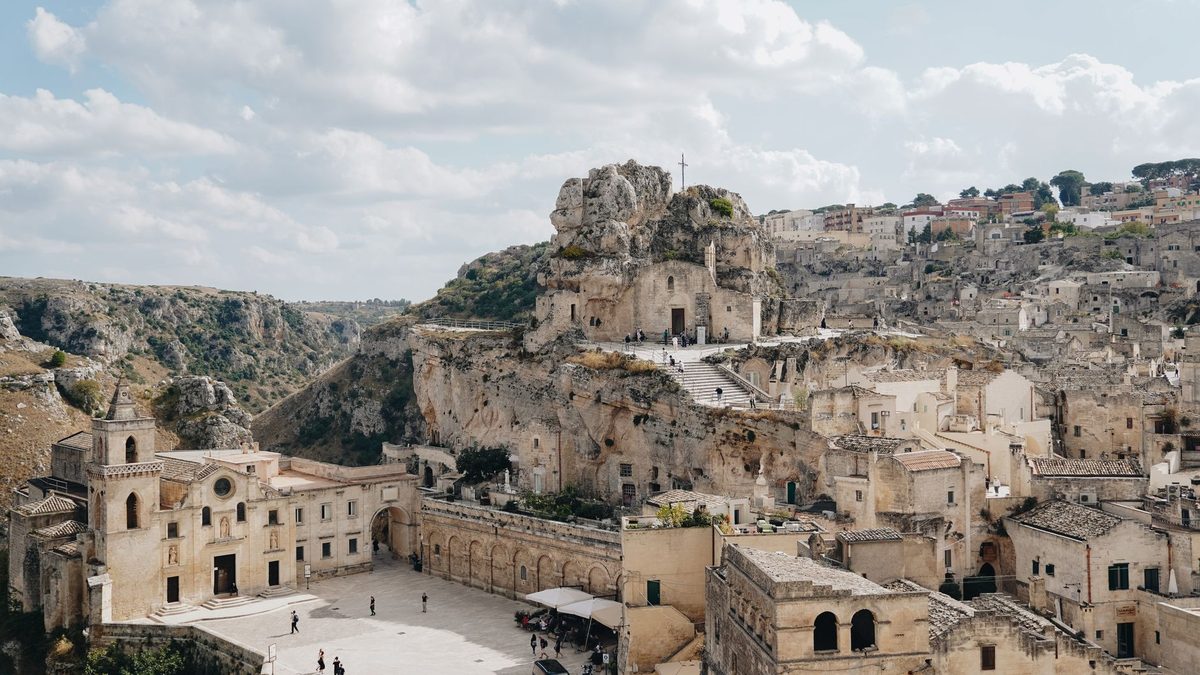
- Sasso Barisano and Sasso Caveoso: the two main districts of the Sassi. Wander the steep lanes and stairs. They are free to explore at any time.
- Rock churches: churches cut into the rock, some with old frescoes. They usually cost a few euros each.
- Palombaro Lungo: a huge underground cistern that stored the city's water. A ticket was €3 in the official brochure we saw.
- Casa Noha: a small museum about the history of the Sassi.
- The view across the ravine: from the Murgia plateau on the other side of the Gravina you get the classic view of the Sassi. Check the rules first: one source says access to the Murgia Timone trails now needs a booked ticket.
Most sites are small and charge a few euros, and opening hours vary, so check before you go. A tourist tax applies in Matera: roughly €2 to €4 per person per night, depending on the star rating. Check the current rate.
One perfect day in the Sassi
Matera is small, but the hills are steep. Start early, rest in the afternoon heat, and come back out for the evening light.
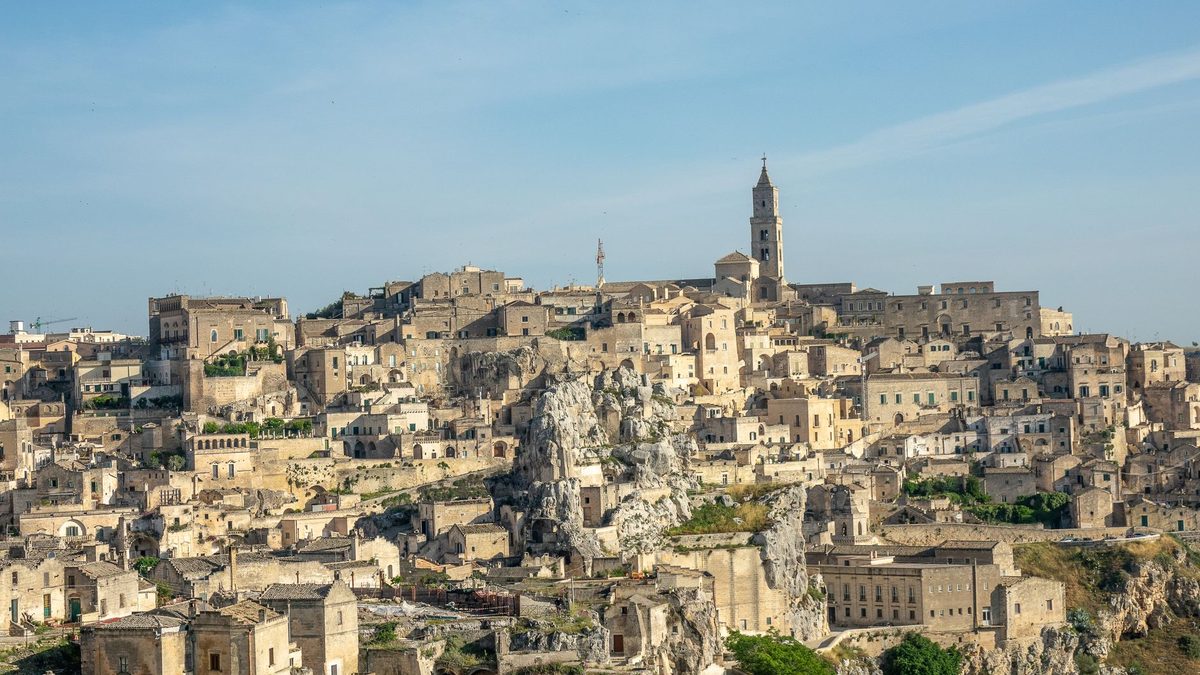
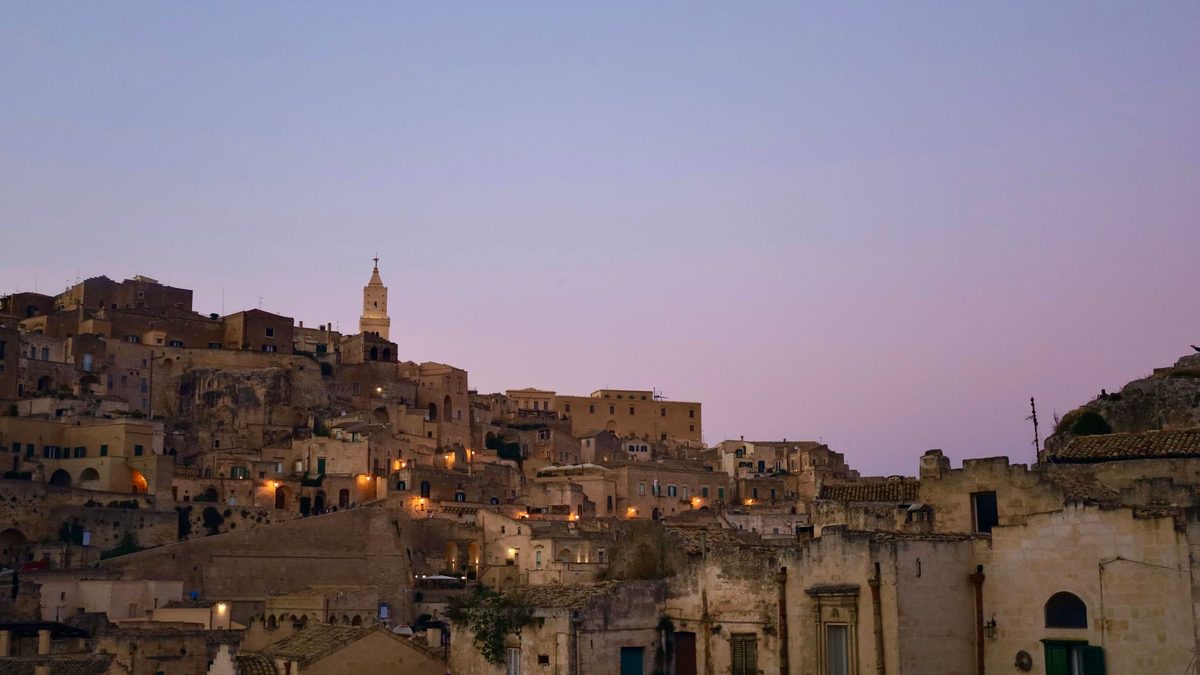
- Early morningWalk the Sassi before the tour groups arrive. Sasso Caveoso first, then Sasso Barisano.
- Late morningVisit a rock church and the Palombaro Lungo cistern.
- LunchEat in a cave restaurant or a trattoria with a view.
- AfternoonCross to the Murgia plateau for the view back over the Sassi (check the ticket rules).
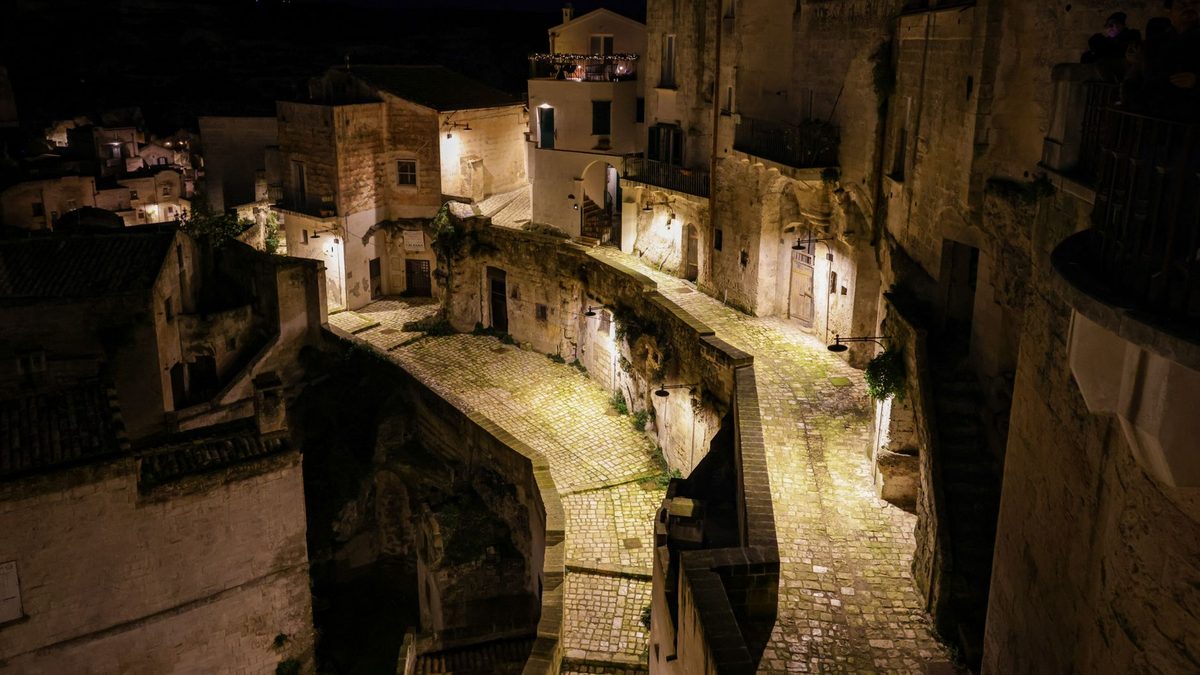
- EveningWatch the stone turn gold at dusk, then see the Sassi lit up after dark.
Advertisement
Where it is and how to get there
Matera is in Basilicata, in southern Italy, close to the border with Puglia.
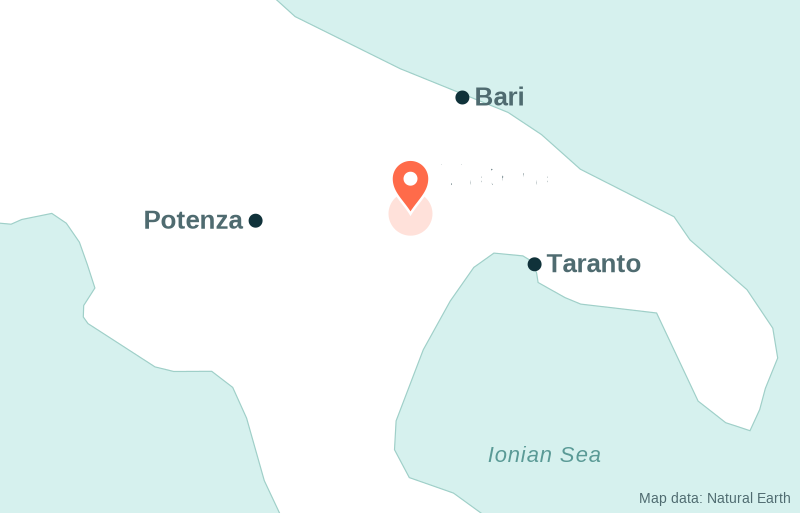
- By car About 50 to 60 minutes from Bari by road.
- By bus Direct buses run from Bari to Matera in about 1 to 1.25 hours, with FlixBus and MarinoBus among the operators. Tickets start at under €10.
- By train There is no fast direct train. Regional trains run from Bari on the FAL line via Altamura and take longer, roughly two hours or more including changes.
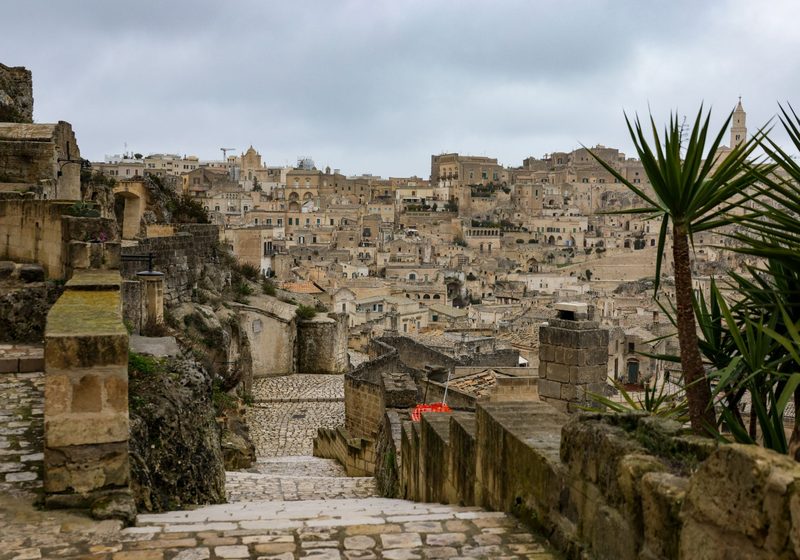
- In the Sassi The streets are steep, with uneven stone steps. Wear shoes with grip. A local bus also runs towards the Sassi.
Good to know: check the bus and FAL train timetables the day before, as services vary. Matera Centrale is the main station for FAL trains and shuttle buses.
Where to stay: cave hotel or new town?
In the Sassi
Restored cave hotels and guesthouses carved into the rock. Atmospheric, but there are many steps, so check access if you have luggage.
Best for: the cave experienceIn the new town
Easier access with a car, and you can walk down to the Sassi.
Best for: easy accessWhen to go
- Spring April to June. Warm and green, and ideal for walking.
- Summer July and August. Hot, and the stone holds the heat, so plan walks for early and late in the day.
- Autumn September and October. Warm days, softer light and fewer crowds.
- Winter November to March. Cool and quiet, and it can be cold and wet. Some places have shorter hours.
Advertisement
Our tips for Matera
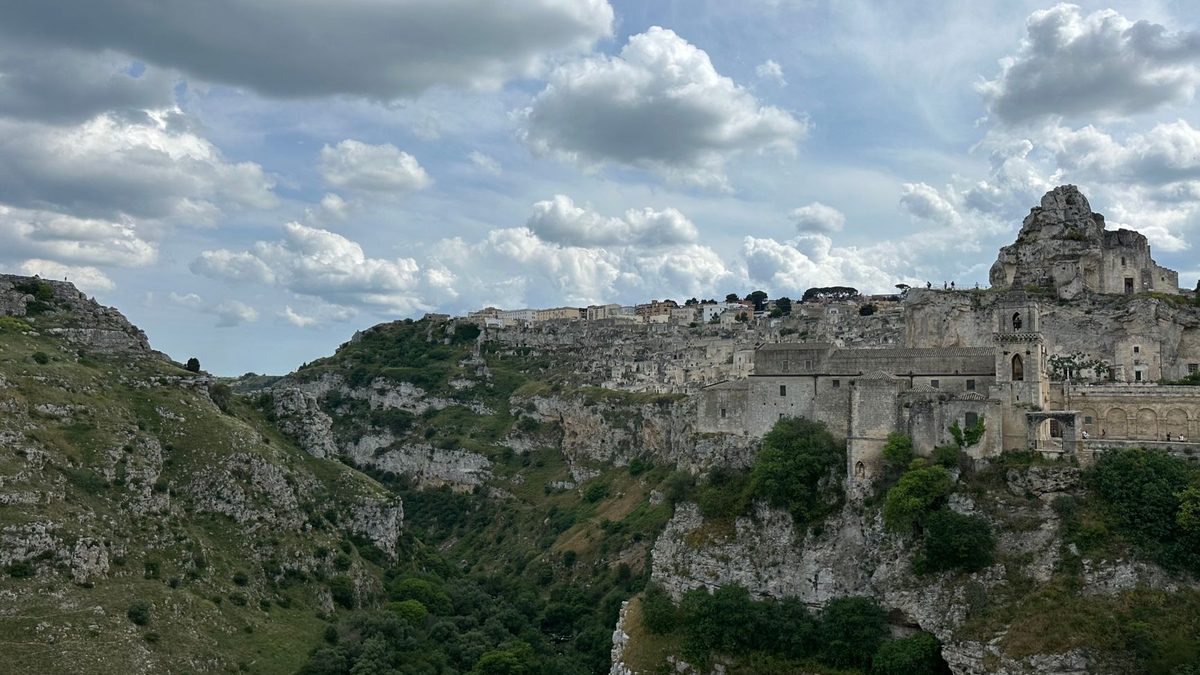
- Wear shoes with grip. The stone steps are steep and can be slippery.
- See it at dusk and after dark. The Sassi look best in the evening light.
- Walk early. The lanes are quietest in the morning.
- Think about luggage. Some cave rooms are up many steps.
- Check the Murgia ticket rules. Access to some trails now needs a booked ticket.
Don't make these mistakes
- Visiting for only an hour. The Sassi reward slow walking. Allow at least half a day.
- Wearing flip-flops. The steps are steep and uneven.
- Walking at midday in August. It is hot, and the stone holds the heat.
- Trying to drive into the old town. The lanes are narrow and steep.
- Skipping the evening. The Sassi after dark are the best part.
Quick answers
How do I get from Bari to Matera?
By bus in about 1 to 1.25 hours, by car in 50 to 60 minutes, or by regional train with a change, which takes longer.
Are the Sassi free to visit?
Yes, the districts are free to walk at any time. Churches, museums and the Palombaro Lungo charge a small fee.
Can I sleep in a cave?
Yes. There are restored cave hotels in the Sassi.
How long do I need?
One full day and a night is ideal.
When did people leave the caves?
In the 1950s, when the government moved most residents to new housing.
How do I get from Alberobello to Matera?
By car it is about 68 km and roughly 1 hour 10 to 15 minutes. Public transport takes longer, so many visitors drive. See our Italy itinerary for a 4-day Alberobello and Matera plan.
Before you go
Have data when you land
Maps and bus times on your phone from the moment you land in southern Italy.
Get your eSIMAdvertisement
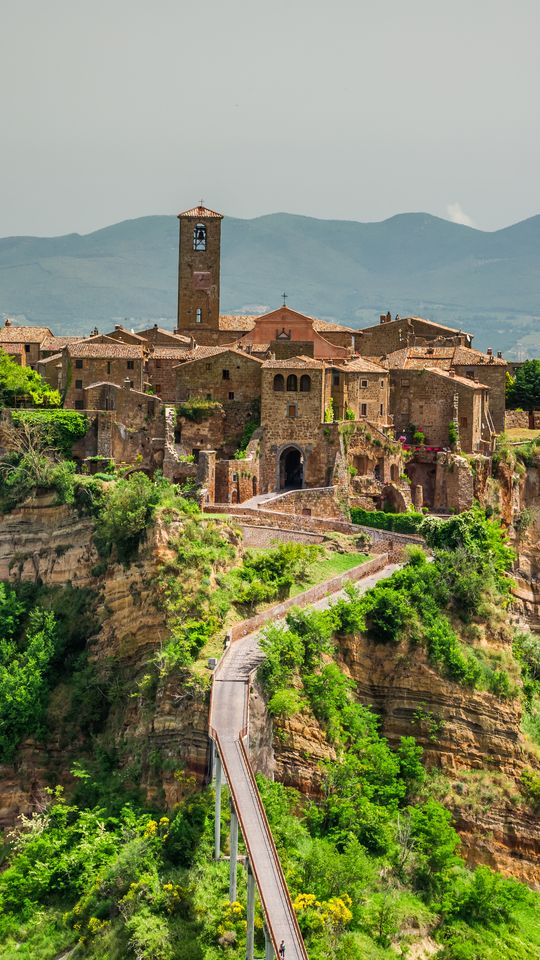 Civita di Bagnoregio
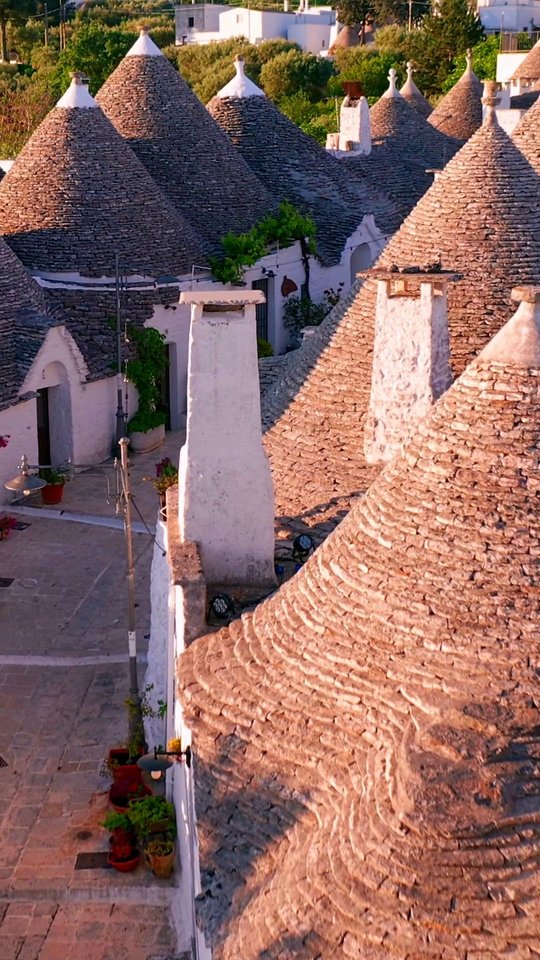 Alberobello
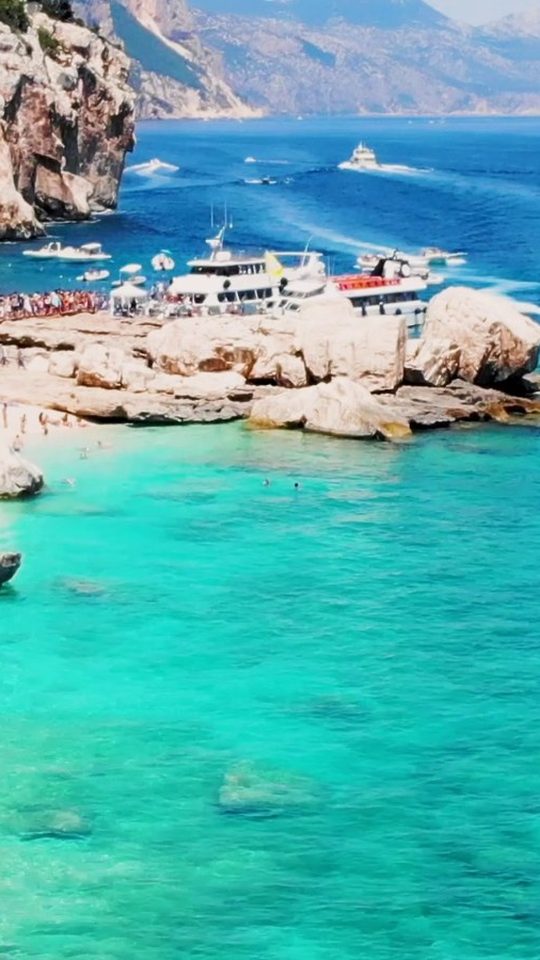 Cala Mariolu
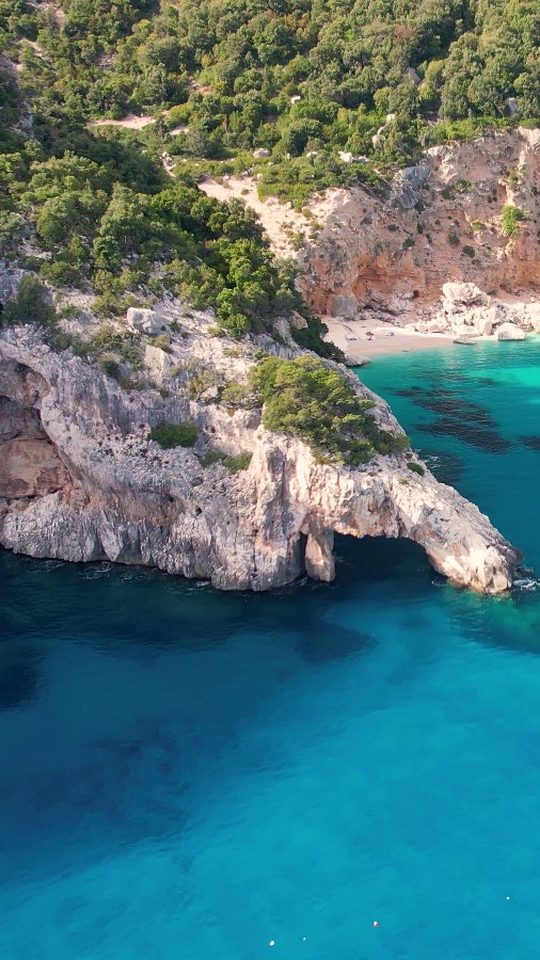 Cala Goloritzé
 Rastoke & Plitvice
 Yamadera
 Trolltunga
 Palawan
 Shirakawa-go
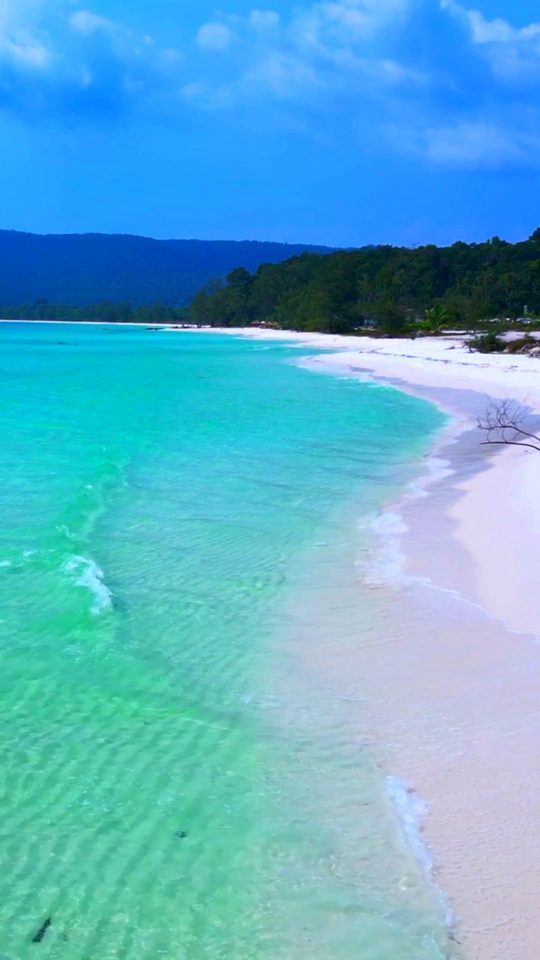 Koh Rong
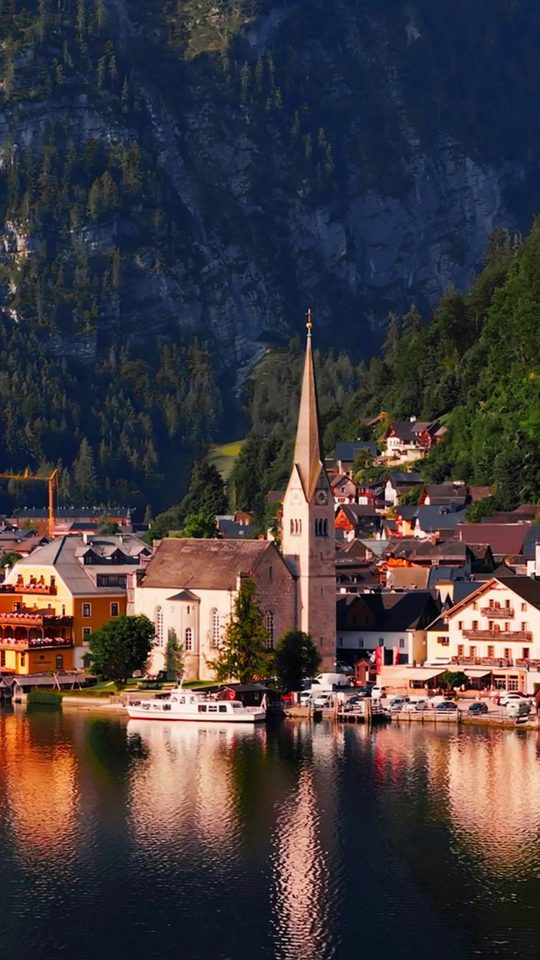 Hallstatt
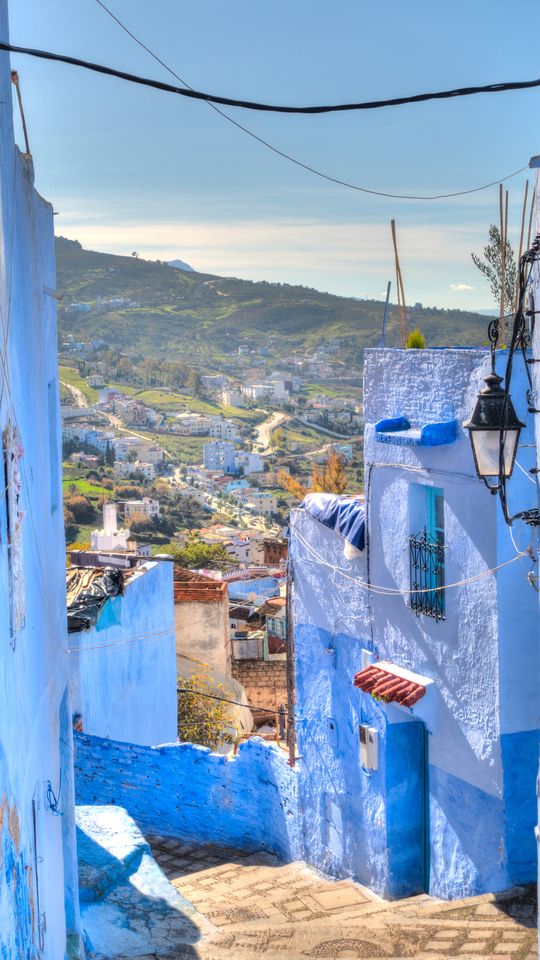 Chefchaouen