 Hidden Gems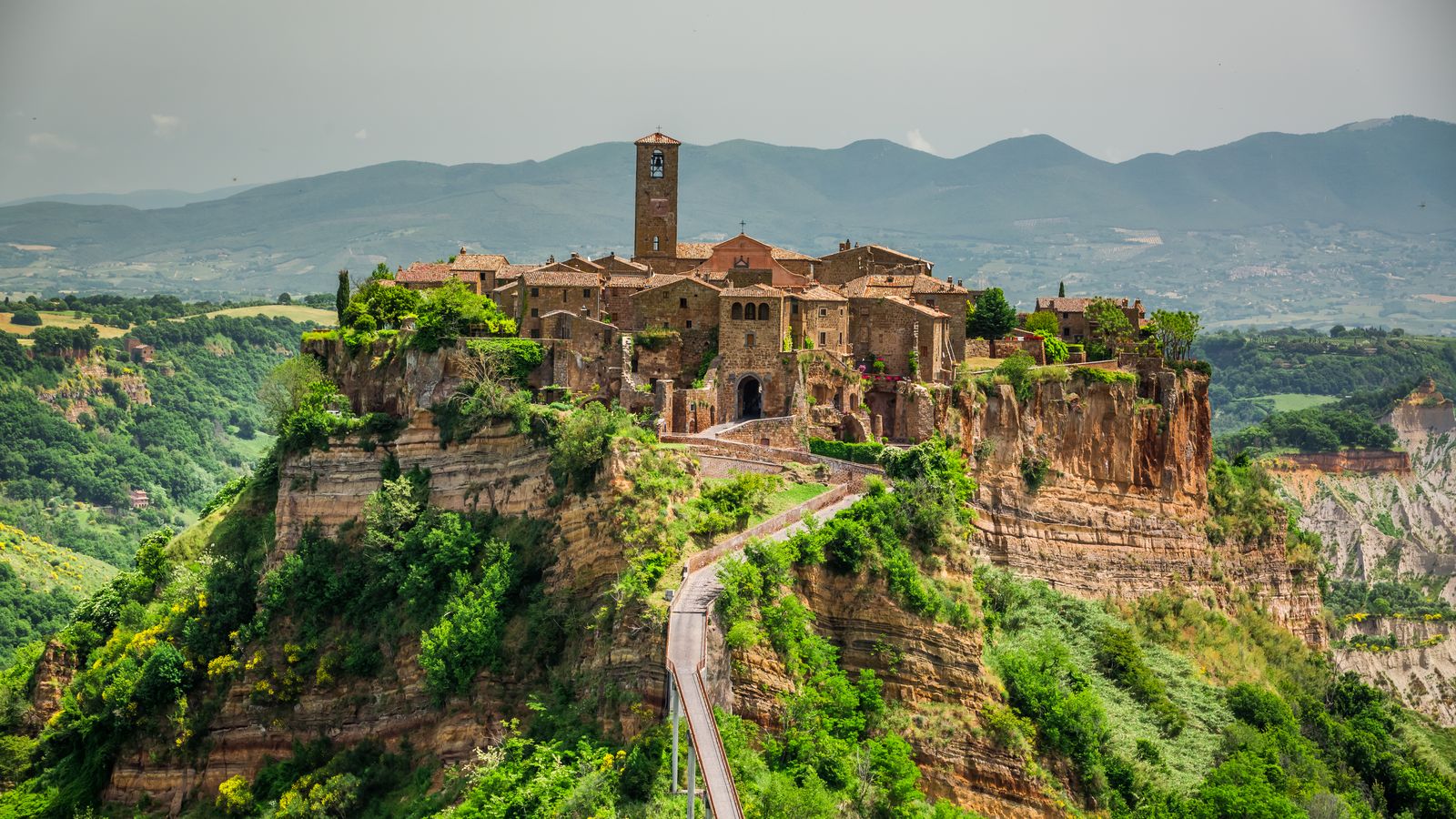
 Italy · On our TikTok
The village that's slowly falling off its cliff
The Etruscans built a town on this ridge more than 2,500 years ago. The problem is the ground: soft volcanic rock and clay that wind and rain wear away every year. Over the centuries houses at the edge have crumbled into the valley, and an earthquake in 1695 cut the village off from the world around it.
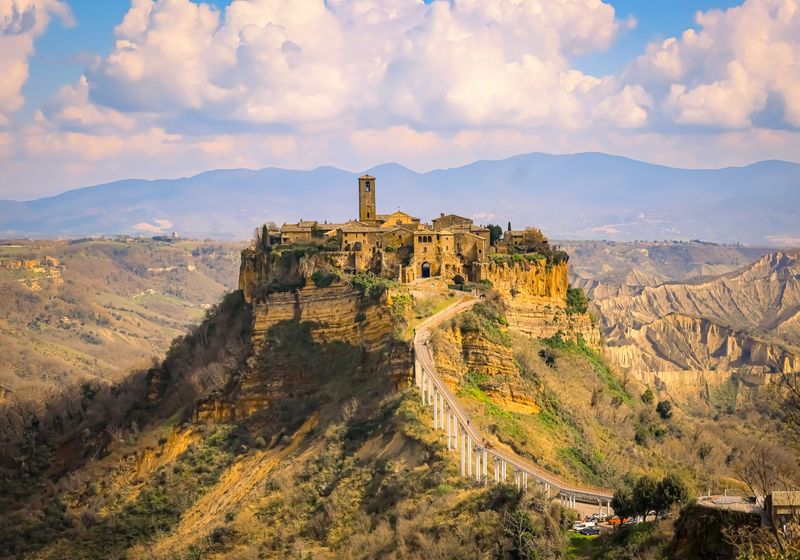
That's why Italians call it "la città che muore", the dying city. Today a 300-metre footbridge is the only way in, and only a handful of people still live here year-round. Walking across it, with the village floating above the eroded valley, is one of the most unreal arrivals in Europe.
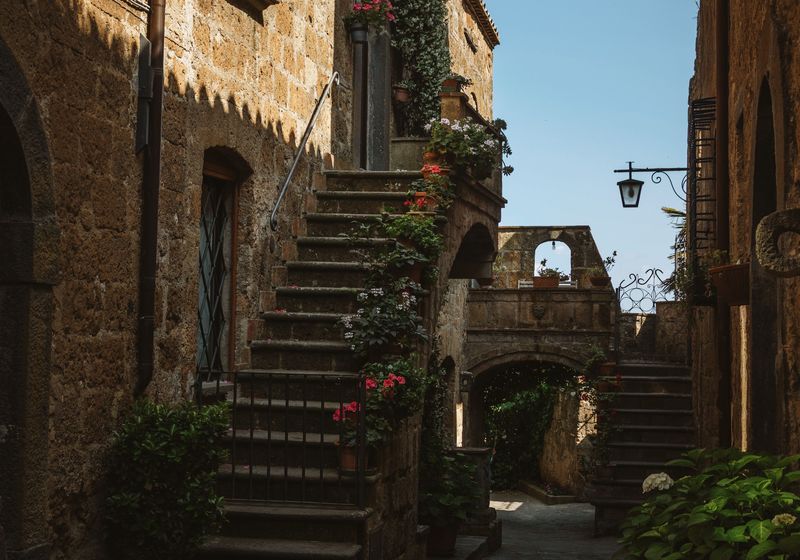
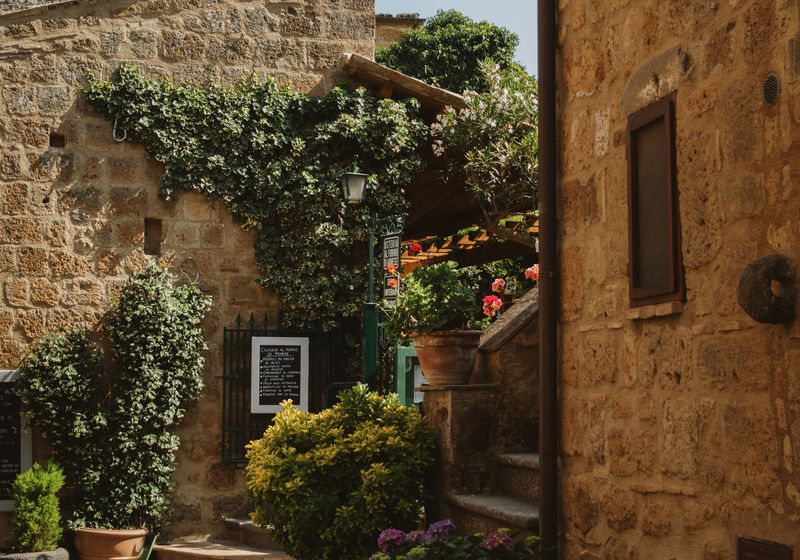
What to see
- The bridge walk: the footbridge climbs steeply toward the village. Stop halfway and look back at the valley.
- Porta Santa Maria: the old stone gateway at the top of the bridge, the only way into the village.
- Piazza San Donato: the little main square, with its church at the heart of the village.
- The edge of the village: walk to the far end, where the lanes stop at the cliff and the valley drops away below.
- The Calanchi valley: the eroded clay ridges all around. The viewpoint in Bagnoregio gives the classic view of the village and the bridge.
Our tips for Civita di Bagnoregio
- Stay the night. There are a few B&Bs inside the village, and overnight guests don't pay the entry fee. After the day-trippers leave, it's silent.
- Come early for the mist. On autumn and winter mornings fog can fill the valley, and the village seems to float on a sea of clouds.
- Check the bus before a weekend trip. Cotral buses from Orvieto don't always run on winter weekends.
- Wear proper shoes. The bridge is steep and the lanes are old, uneven stone.
- Pair it with Orvieto. The hilltop town where the bus starts is worth a few hours on its own.