 Trip plans
- Temples and snow country: Yamadera and Shirakawa-go
- Southern islands: Yakushima and Miyakojima
- What to eat
- What it costs
- Good to know
- Quick answers
Temples and snow country: Yamadera and Shirakawa-go (7 days)
Best time: Late October to November for autumn colour. December to February has deep snow and a light-up at Shirakawa-go, but the Yamadera steps can be icy.
Guides in this plan: Yamadera · Shirakawa-go
- Day 1: Tokyo Arrive and rest. Tokyo is the hub for both halves of the trip.
- Day 2: Tokyo to Yamagata The Tsubasa shinkansen takes roughly 2 hours 20 minutes to 3 hours depending on the train. Spend the afternoon in Yamagata city.
- Day 3: Yamadera Take the JR Senzan Line from Yamagata, about 20 minutes, with trains roughly every 30 minutes. Climb the stone steps early, stopping at Niomon Gate and the small halls, and rest at Godaido for the view. Some trains are local stoppers, so check that yours stops at Yamadera.
- Day 4: Travel day Head west towards Takayama. This is a long day by rail, so check current timetables and plan to arrive in the evening.
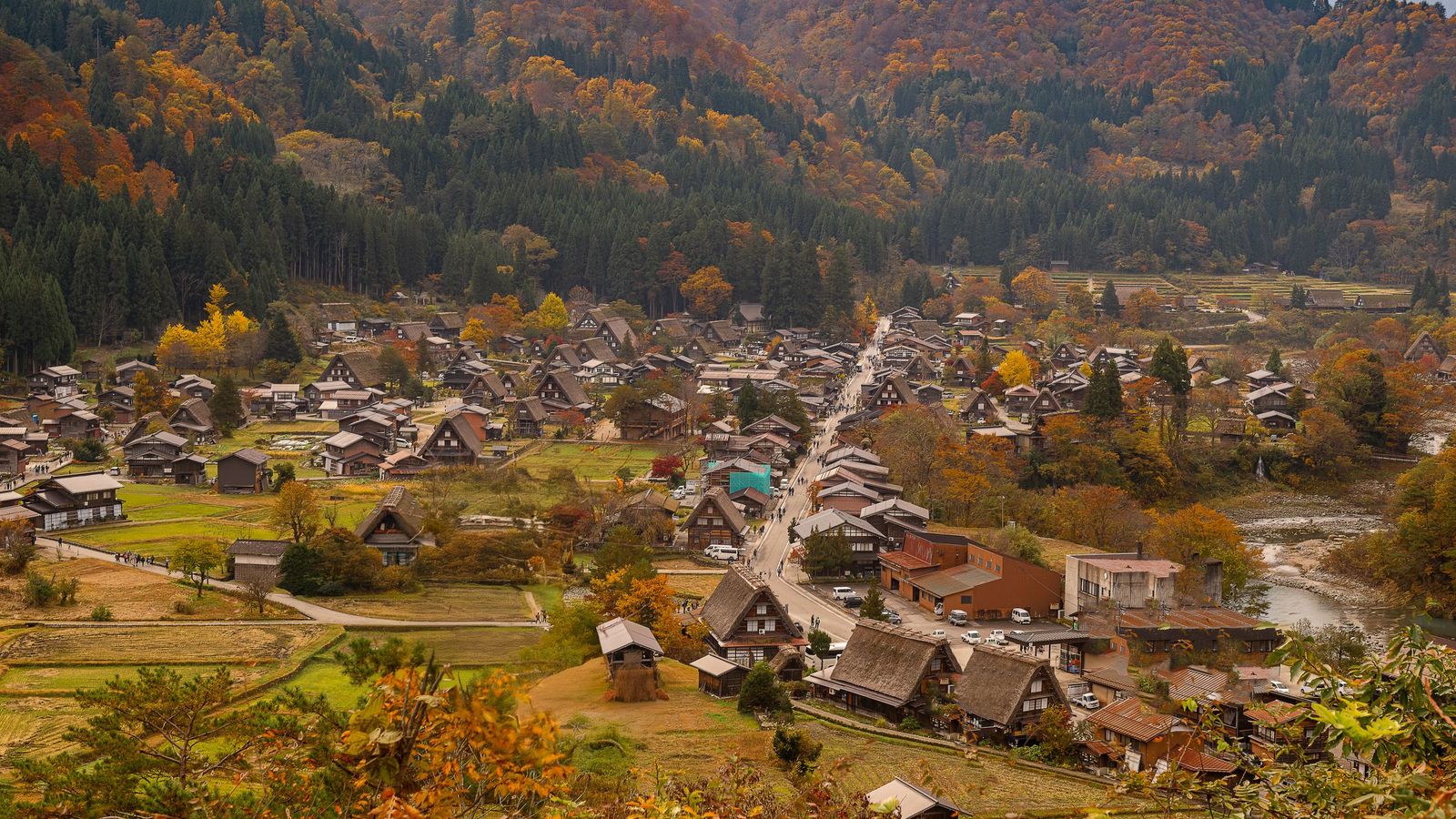
- Day 5: Takayama to Shirakawa-go The bus from Takayama takes roughly 50 minutes to 1 hour 40 minutes depending on the service, and some services need a reservation. Walk up to the viewpoint before the first buses arrive, visit a farmhouse museum and spend the night in a farmhouse guesthouse if you can.
On the way: Withdraw yen in Takayama or Kanazawa first, because ATMs are limited in the old village and not every place takes cards. Shirakawa-go is known for Hida beef: one guide names Irori (set menus in a farmhouse), Kita-no-Sho (a hoba miso beef plate) and Tenkara (takes reservations, which helps around the midday tour-group rush). The same guide suggests a quick Hida beef snack in the village and saving a full sit-down meal for Takayama, where it can be cheaper. Eat before early afternoon. - Day 6: Shirakawa-go Wander the paddies and back lanes, and visit the open-air museum when the tour buses arrive.
On the way: The nearby Gokayama villages, such as Ainokura, are also UNESCO sites and are quieter. One traveller mentions a simple hoba miso lunch there. Check bus times before you plan it. - Day 7: Onward Return to Takayama and continue to Kanazawa, Nagoya or your onward route.
Good to know: Yamadera has no hotels listed on Klook, so the Yamagata city link is the nearest base.
Book it:
- Hotels near Shirakawa-go on Klook
- Shirakawa-go tours on Klook
- Hotels in Yamagata on Klook
- Yamadera tours on Klook
Southern islands: Yakushima and Miyakojima (8 days)
Best time: Spring to autumn. Typhoons hit the islands often, so leave buffer days and check forecasts. Yakushima has rain all year.
Guides in this plan: Yakushima · Miyakojima
- Day 1: Fly to Kagoshima Direct flights from Tokyo take about 1 hour 50 minutes.
- Day 2: Kagoshima to Yakushima The high-speed jetfoil takes about 2 to 2.5 hours (some sources say up to 3), and a flight takes about 35 to 40 minutes. Stay near the coast or in a mountain hut.
- Day 3: Jōmon Sugi A long hike. Take the first shuttle bus before dawn to the Arakawa trailhead, follow the old logging tramway and the forest path up, and allow time to get back before the last shuttle. Bus season normally runs from March to November.
- Day 4: Forest and coast Walk Shiratani Unsuikyo or visit the waterfalls and beaches. Bring waterproofs, because rain falls all year.
- Day 5: To Miyakojima Return to Kagoshima and fly on via Naha to Miyako. Naha to Miyako is about 45 minutes to 1 hour. Connections may force a night in Naha, so check flights first.
- Days 6 and 7: Miyakojima Yonaha Maehama Beach in the morning, a guided snorkel for turtles and coral, and the Irabu and Kurima bridges by car. Watch the sunset from a headland or beach.
- Day 8: Leave Keep a buffer for typhoon cancellations before any international flight.
Good to know: The Jōmon Sugi trail is a full day. Many people join a guided tour.
Book it:
- Hotels on Yakushima on Klook
- Yakushima hiking tour on Klook
- Hotels on Miyakojima on Klook
- Miyakojima snorkel tour on Klook
What to eat in Japan
Japan's regions have strong food identities, and both plans cross several of them. These are the dishes our sources tie to the places in the plans.
- Imoni: a taro stew, listed among Yamagata's traditional dishes by Japan's agriculture ministry, along with tama konnyaku (konjac balls).
- Yonezawa beef: Yamagata's wagyu, listed in the same ministry guide and often served marinated in miso.
- Hida beef: Takayama's local wagyu. In Shirakawa-go, one guide names Irori for set menus in a farmhouse, Kita-no-Sho for a hoba miso beef plate and Tenkara, which takes reservations.
- Hoba miso: a regional miso dish. One traveller had a simple hoba miso lunch in the nearby Gokayama villages.
- Goya champuru: stir-fried bitter melon with tofu, pork and egg, described as a defining dish of Okinawan home cooking, so look for it on Miyakojima.
We could not find reliable sources for Yamadera and Yakushima specialities yet. Prices at Shirakawa-go restaurants are higher than in Takayama, so one guide suggests a snack there and a full meal in Takayama.
What it costs
Prices we found in public sources while writing the guides, in the local currency where possible. They change, so check before you book. Hotels and meals are not in the table because they vary too much.
| Item | Price we found | Guide |
|---|---|---|
| Rental car on Miyakojima | roughly ¥4,000 to ¥10,000 a day | Miyakojima |
| Yakushima trailhead shuttle, round trip | about ¥1,400 to ¥2,000 | Yakushima |
| Yakushima conservation contribution | about ¥1,000 for the Arakawa trail, about ¥500 for Shiratani Unsuikyo (as reported) | Yakushima |
| Yamadera entry | 300 yen adult | Yamadera |
Good to know
- Currency: Japanese yen (JPY). ATMs are limited in Shirakawa-go, so withdraw cash in Takayama or Kanazawa first.
- Emergency numbers: 110 police, 119 fire and ambulance.
- Getting around: Trains and highway buses. Some Shirakawa-go buses need a reservation.
- Weather: Typhoons often hit the southern islands, so keep plans flexible.
- Season: Late October to November for colour in the north, and spring to autumn for the islands.
Quick answers
How many days do I need for Yamadera and Shirakawa-go?
About 7 days including Tokyo, because the two places are in different regions with a long rail day between them.
Is it easy to reach Yakushima?
Yes. Fly from Kagoshima in under 40 minutes, or take the jetfoil in about 2 to 2.5 hours. Weather can disrupt both, so keep a spare day.
When is the best time?
Late October to November for colour in the north, and spring to autumn for the islands, with typhoon risk from late summer.
Travel times and prices come from public sources checked in November 2026 and change often. Check timetables, fees and road conditions before you go.